
A perfect storm
Powerful El Niño compounds development headwinds. Here’s how we can protect the most vulnerable.
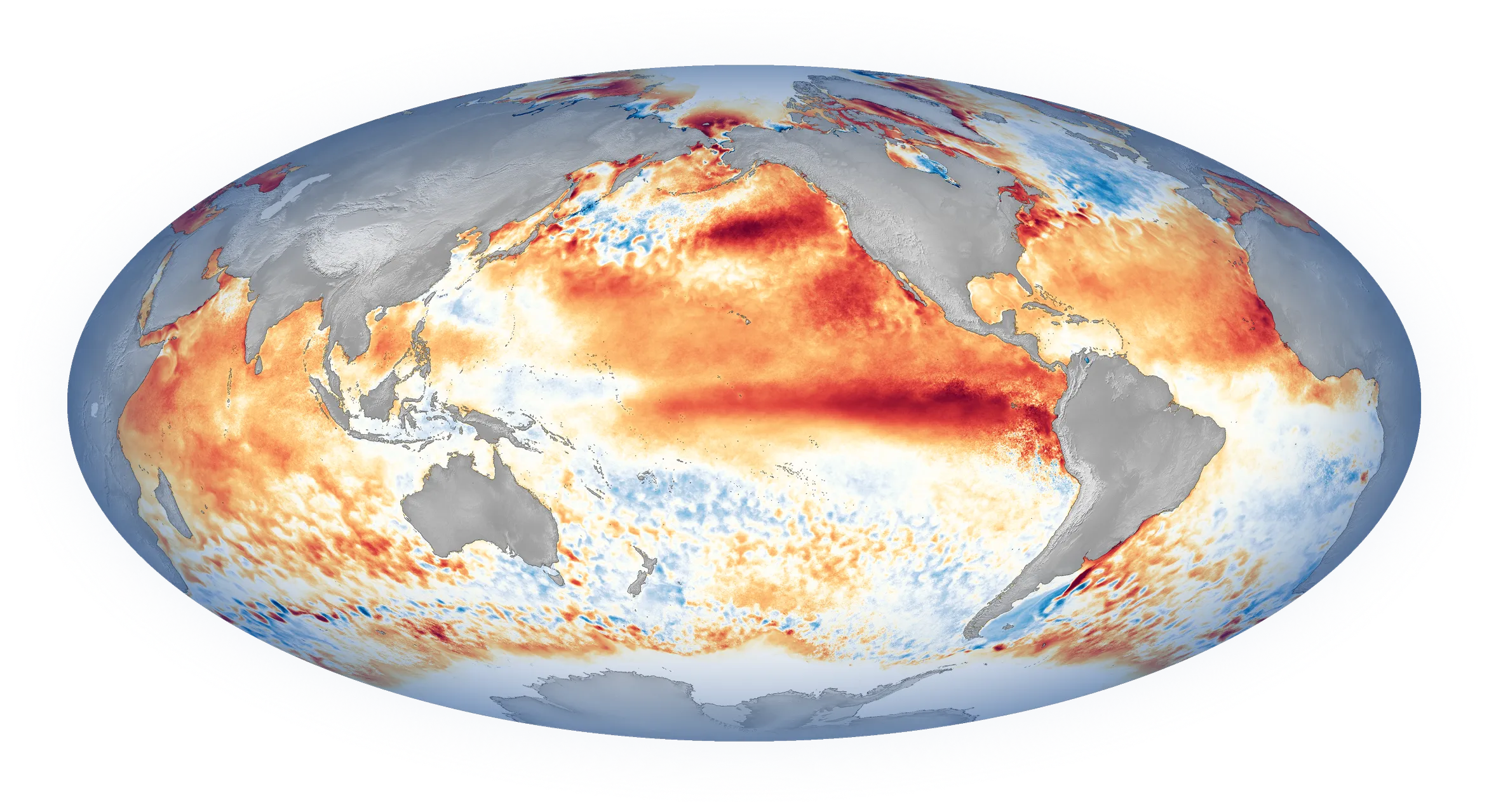
Map | NOAA
This year’s El Niño is expected to be the strongest on record, and that has serious implications for developing countries already facing strong headwinds and compounding climate change impacts.
The World Meteorological Organization says the current El Niño will persist through February 2027, significantly changing rainfall patterns and fuelling extreme weather and rising global temperatures. It is already breaking 40-year records and will continue, with sea surface temperatures likely reaching +3.7°C above average or more, beating record-setting El Niños in 1982, 1997 and 2015.
Acting early—before El Niño’s worst blows—could halve the cost of protecting vulnerable households in developing countries. UNDP analysis puts the cost of early support at around US$36 billion, compared with up to $73 billion if governments wait to respond until after the damage is done.
El Niño is a critical issue for UNDP, as it directly relates to its climate resilience and development mandate, and Sustainable Development Goal 13 on Climate Action. UNDP works closely with governments to strengthen their climate risk management and invest in risk-informed development, as well as tackling underlying vulnerabilities.
$36 billion
cost of early support to protect vulnerable households
$73 billion
cost if governments wait until after the damage is done
El Niño threatens the essentials people depend on: food on the table, clean water and a secure livelihood. We have warnings, and we know that acting early can protect millions of people and save billions of dollars. People facing these risks cannot afford delay.



What is El Niño?
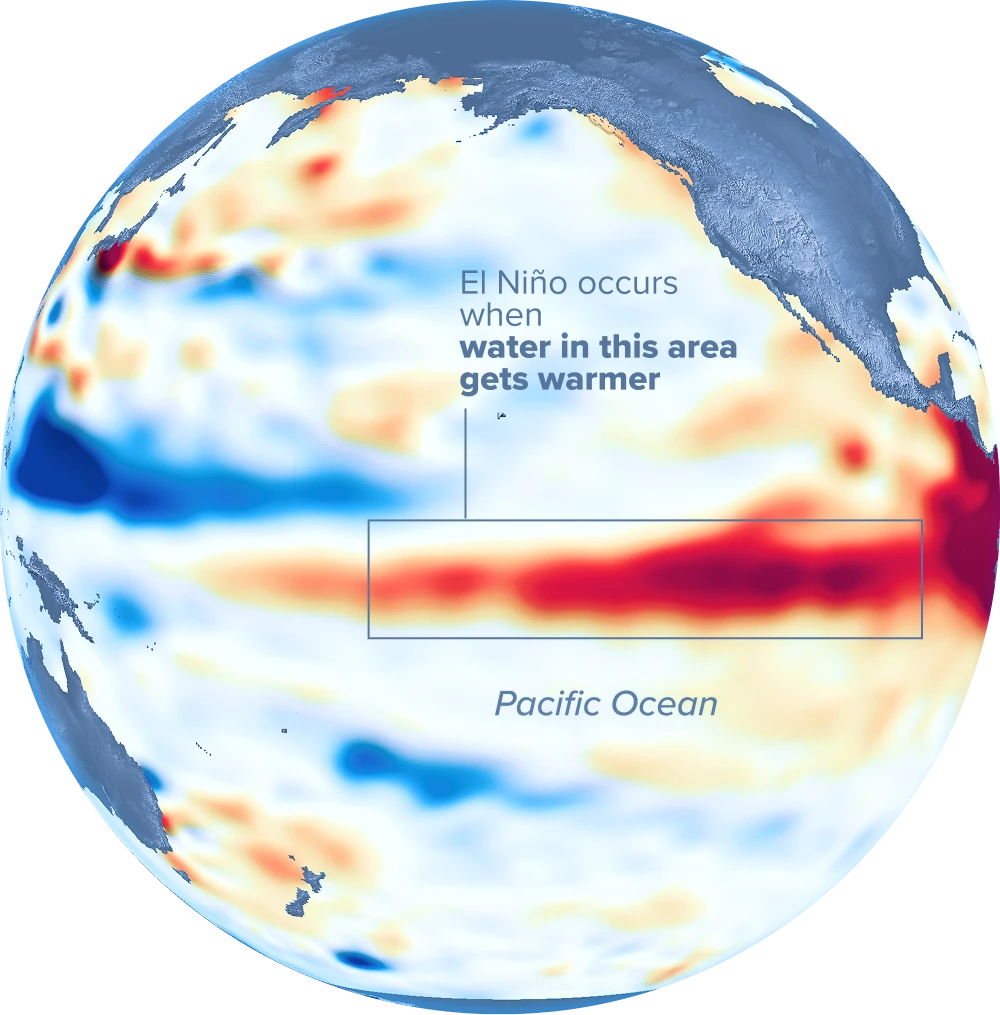
El Niño is a naturally occurring climate pattern which starts with warmer-than-usual surface waters in the tropical Pacific Ocean and alters rainfall and temperatures around the world. This natural phenomenon is being supercharged by human-caused climate change, increasing the energy and moisture available to fuel extreme weather.
+3.7°C
Sea surface temperatures above average
The effects on development from this year’s El Niño will be profound.
It has the potential to reduce crop yields, undermine livelihoods and even affect power generation, and it will exacerbate existing crises such as the conflict in West Asia. It will disrupt food and energy supplies, and for families already facing tight budgets, this may make it harder to meet basic needs.
Without action, these overlapping shocks could add to existing food insecurity, hinder economic growth and increase poverty. UNDP estimates that, without intervention, a 5 percent increase in food prices in 2026 could push nearly 100 million people below the poverty line in developing countries.
El Niño is being supersized before our eyes. The science leaves no room for doubt: the planet is in uncharted waters, and those waters are heating up. Sea surface temperatures are rising, temperatures keep climbing and the world is in the danger zone of extreme weather.
The El Niño Strategy
While countries cannot prevent these shocks, they can do much to limit their consequences.
UNDP’s approach is long term. The El Niño Strategy, developed in 2015, focuses on supporting countries as they build resilience and deliver urgent improvements in early warning and preparedness for El Niño’s short- and long-term consequences.

Building resilience to El Niño starts long before a crisis strikes. Through early warning systems, climate-smart agriculture and stronger preparedness, UNDP helps communities anticipate risks, protect livelihoods and withstand future shocks. In Zimbabwe, for example, women farmers are gaining the knowledge and skills to adapt to changing climate conditions and safeguard their livelihoods.
Photo:
UNDP Zimbabwe
Anticipating risk
The growing strength of El Niños, mapped onto a rapidly heating planet, requires greater understanding of how climate, geopolitical and economic pressures interact, and how existing vulnerabilities can turn overlapping shocks into lasting setbacks for human development.
The challenge is to move from responding to El Niño-related crises as they unfold to anticipating their combined effects. This involves foreseeing risks, protecting people from temporary shocks before they become lasting setbacks and addressing the underlying vulnerabilities that make the shocks more damaging.
8.2 million
more people could face food insecurity
Asia Pacific
In the Asia-Pacific region, El Niño comes on the heels of devastating flooding in Nepal, Thailand and Japan, leaving many people even more vulnerable. An additional 8.2 million people could face food insecurity, with the most serious effects expected to emerge in late 2026 and into early 2027, leaving only a short window of time to act.
UNDP is working with communities at every level to update risk pictures, revise contingency plans and prepare for early recovery.
In Thailand, facing increasingly erratic weather patterns, efforts to build climate resilience extend from setting national priorities down to individual farmers diversifying their crops and adopting climate smart agriculture.
After completing Thailand’s Good Agricultural Practices training, farmer Kritsana Thongpheng now plants green manure crops to naturally enrich soil, and she has stopped the practice of burning crop lands to clear fields and control pests.
“Soil is like our skin,” she says. “If we burn it, it takes a long time to heal.”

Maize farmer Kritsana Thongpheng in Phetchabun Province, Thailand. UNDP helps farmers adopt climate-smart practices that protect their soil and harvests as weather becomes more erratic.
Photo:
UNDP Thailand/Patipat Janthong
Stopping temporary shocks from becoming long-term setbacks
Early warning systems and effective and comprehensive preparation are crucial to lessening the effects of El Niño. This includes robust data collection and communications systems that can detect threats and alert those in harm’s way, giving them precious time to take precautions.
Whether it comes days, hours or just moments in advance, an early warning saves lives and protects property.
2.8 million
people reached
Zimbabwe
“If there is a threat of floods or if weather conditions are bad, the radio alerts us to prepare, so everyone is forewarned,” Mutape Jerera says.

Agricultural extension support and better water management help farming families adapt to uncertain rainfall, protecting the crops, food supplies and incomes their households depend on.
Photo:
UNDP Zimbabwe
Addressing underlying vulnerabilities
The real test of resilience is not simply how well countries weather a crisis, but how much less vulnerable they are when the following one arrives.
Responding to immediate needs is essential, but resilience also requires tackling the structural weaknesses that allow crises to repeatedly undermine progress.
50 million+
people affected by food insecurity
West and Central Africa
2%
GDP reduction, at least
4.8 million
people pushed into poverty
Latin America and the Caribbean
On the other side of the Atlantic, Latin America and the Caribbean imports up to 90 percent of its fertilizer, a vulnerability that has become more pronounced since the outbreak of conflict in Ukraine and the region’s growing role as a food exporter. Recent analysis warns that El Niño could reduce the region’s GDP by at least 2 percent, and push an estimated 4.8 million people into poverty.
Its effects will vary—forecasts predict drought and extreme heat in Central America, while the Pacific coasts face heavy rainfall and flooding.
Big picture thinking
Preparing for and managing these shocks require big picture thinking. Monitoring changes in multidimensional poverty, health and access to essential services can help governments identify where vulnerabilities are accumulating and design more effective responses.

UNDP’s 20 years of experience supporting over 160 countries delivering climate action and disaster risk reduction has given it the tools, resources and expertise to help countries tackle the varied effects of El Niño in the short and long term. Our work helps build the capacity of countries and communities to prepare for hazards, prevent them from becoming disasters, recover from their impacts and build stability for the future.
The shocks may be inevitable.
The devastation need not be.